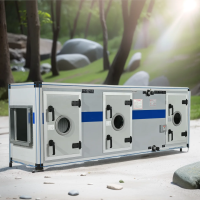
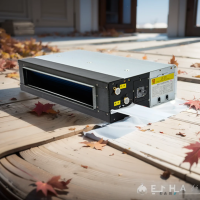
In modern building management, Fan Coil Units (FCUs) and Fresh Air Systems are two critical components for maintaining indoor air quality and thermal comfort. This guide provides a comprehensive overview of how they work, how they're controlled, and how to select the right equipment.

Exhaust: The system's fan actively expels indoor air to the outside, creating a slight negative pressure inside the building.
Intake: This negative pressure draws fresh outdoor air inside through dedicated intake vents.
Continuous Flow: This push-pull effect establishes a continuous "fresh air flow field," ensuring consistent and efficient air exchange throughout the space.
Single-System (Exhaust-Only or Supply-Only): Relies on a fan for either exhaust or supply, with the opposite process happening naturally through leaks in the building envelope. This is a cost-effective option but less efficient and can be affected by weather conditions.
Balanced System (Supply & Exhaust): Uses separate fans to actively manage both the supply of fresh air and the exhaust of stale air. This is the most efficient method. Advanced models often include a Heat Recovery Ventilator (HRV) or Energy Recovery Ventilator (ERV), which preconditions incoming air by transferring energy from the exhaust air, significantly reducing heating and cooling costs.
A Fan: Usually a centrifugal type with multiple speed settings (High, Medium, Low).
A Heat Exchange Coil: Generally a copper tube-aluminum fin design for efficient heat transfer.
A Housing and Drain Pan: The housing directs airflow, while the drain pan collects and removes condensation produced during cooling.

Zoned Control: Individual temperature control in each room or zone allows for superior comfort and energy savings.
Space Efficiency: FCUs are compact and require only small water pipes and fresh air ducts, saving valuable ceiling space. This makes them ideal for retrofits.
Flexible Zoning: The system can be easily partitioned based on a room's orientation, usage, or schedule.
This system is widely used in hotels, office buildings, and apartments where individual room control is desired.
Device: A simple 3-speed switch.
Operation: The user manually turns the unit on/off and selects the fan speed. This is a low-cost option but does not provide automatic temperature regulation.
Device: A room thermostat.
Operation: The thermostat senses the room temperature and compares it to the setpoint. It then automatically controls an electric 2-way or 3-way valve on the water line to regulate flow and may also cycle the fan speeds. This maintains a consistent, comfortable temperature and improves energy efficiency.
Proper selection is key to performance and efficiency.
Step 1: Define Project Requirements
Unit Type & Capacity: Select the FCU type (e.g., concealed, cassette, floor-mounted) based on the space and ceiling design. Determine the required cooling/heating capacity.
Load Calculation:
Cooling: Calculate the room's sensible heat load (for temperature control) and total heat load (sensible + latent for dehumidification). Key parameters include indoor/outdoor air temperatures, chilled water supply temperature, and required airflow (CFM).
Heating: Verify that the unit selected for cooling has adequate heating capacity for the space, based on the hot water supply temperature available.
Step 2: Specify Technical & Installation Details
Water Side: Confirm design water flow rate, operating pressure, and pressure drop. For heating, limit hot water temperature to 140°F (60°C) max to reduce scaling.
Connections: Specify the water connection handedness (left or right) to match piping layout.
Maintenance: Note the bearing type on the fan motor; some require periodic lubrication as part of routine maintenance.
Installation Best Practices:
Insulation: Insulate all cold surfaces, like the condensate drain pan and supply air cabinet, to prevent condensation and dripping.
Air Vent: Ensure an air vent is installed at the high point of the coil to purge air from the system, ensuring optimal performance.