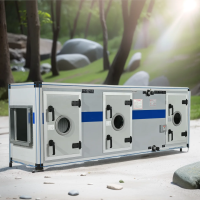
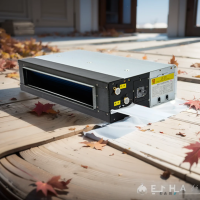
A fan coil unit is a terminal device in a building's HVAC system that utilizes a fan to circulate air over a heat exchange coil, either to cool or heat the air. The coil is connected to a water system, where water is either chilled (for cooling) or heated (for heating). The fan blows air through the coil, transferring heat between the water and the air, thus conditioning the room’s temperature.
In water system fan coil units, this process is often referred to as hydronic heating or cooling since the system relies on water as a medium for heat transfer rather than refrigerants used in direct expansion systems.
The system begins with the circulation of chilled or heated water from a central source, such as a chiller or boiler, to the coil inside the fan coil unit. The water enters the coil through an inlet pipe, where it travels through the copper or aluminum tubes in the coil.
As air is drawn by the fan and blown across the coil, heat is either absorbed or released by the water flowing through the coil.
Cooling Mode: In cooling mode, chilled water absorbs the heat from the air, cooling it down.
Heating Mode: In heating mode, hot water releases heat into the air, warming the room.
The temperature of the water in the coil regulates the temperature of the air passing through it, achieving the desired heating or cooling effect.
The fan inside the unit helps circulate the air across the coil, promoting more effective heat transfer. The fan’s speed can often be adjusted to regulate airflow, depending on the heating or cooling requirements of the space.
The temperature of the air entering the room is determined by the water temperature in the coil, which is controlled by a thermostat or controller. The thermostat communicates with the water valve to regulate the flow of water, adjusting the air temperature accordingly.
When cooling is applied, condensation can form on the coil due to the temperature difference between the coil and the surrounding air. To avoid water damage, a drip tray is installed below the coil to collect the condensate. The tray channels the water into a drainage pipe, preventing leakage and ensuring continuous airflow.
The water system fan coil unit operates through a simple yet effective process of heat exchange using chilled or hot water to condition air. The fan circulates air over the coil, transferring heat from the water to the air (or vice versa), providing efficient heating and cooling. With proper control and maintenance, the fan coil unit is a reliable and energy-efficient solution for temperature regulation in both residential and commercial buildings.
Q1: How does a fan coil unit differ from a central air conditioner?
A: A fan coil unit is a terminal device that uses water for heating or cooling, while a central air conditioner uses refrigerants for the same purpose.
Q2: Can I control the temperature of each room independently with a fan coil unit?
A: Yes, fan coil units are ideal for zoned temperature control. Each unit can be individually controlled using a thermostat.
Q3: Is there any maintenance required for the water system fan coil unit?
A: Yes, regular maintenance is required to clean filters, inspect coils, check water flow, and ensure proper drainage.